
English| EUR
Suggested for you
More currencies
Choose a language
A live volcano is not a monument with a turnstile, and Stromboli rewards travellers who understand its rules before the ferry docks. This how to visit stromboli guide sets out who may walk where, what the island's access window actually looks like, and where the free route ends. The detail sits in the sections below; the framing starts here.
Quick answer
Self-guided access on Stromboli is free, at 0 EUR, and reaches up to 290m; anything higher requires an authorised guide at extra cost. The marked route is open daily from 06:00 to 19:30, with 06:00–16:00 the recommended arrival window so there is time to climb before sunset and watch the nighttime activity. Weather closures happen without notice.
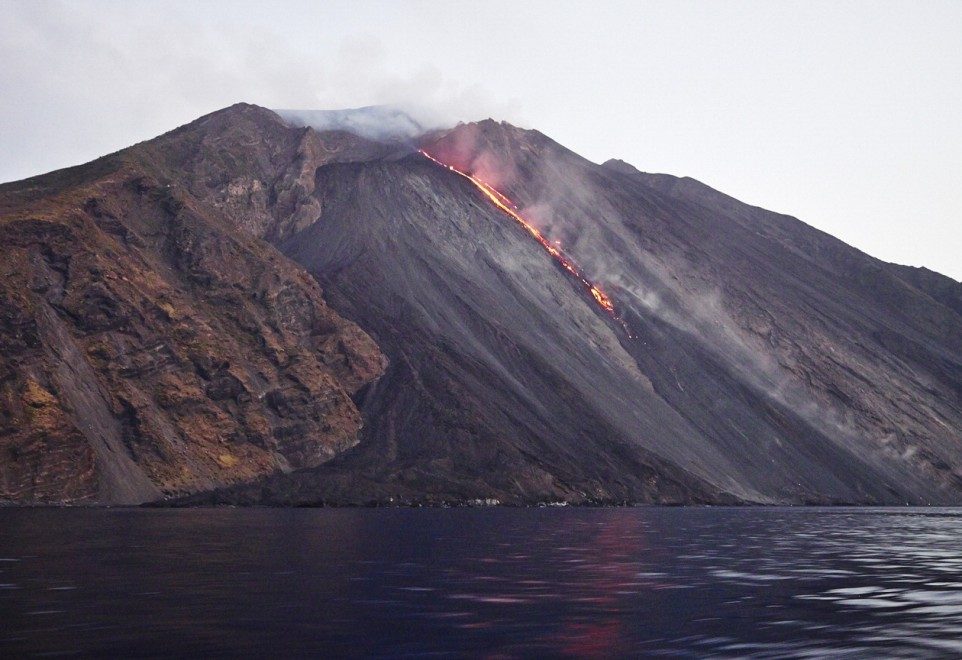
Stromboli has been erupting more or less continuously for at least two thousand years, which is why sailors once called it the lighthouse of the Mediterranean. That persistence is also why the island is regulated differently from any other stop in the Aeolian Islands. Access is not a matter of ticket queues but of altitude: the volcano is divided by a line at 290m, and understanding that line is the whole of how to visit stromboli. Below it, walkers move freely on the marked path toward the Sciara del Fuoco viewpoint. Above it, the ground belongs to authorised guides and licensed groups only, and civil protection ordinances rather than opening times decide who passes. What this means in practice is that most visitors are choosing between two different days out. The self-guided walk from Piscità or the village of San Vincenzo climbs through capers, broom and volcanic scree to a bench of ground where the Sciara del Fuoco — the black scar down the northwest flank — is visible in full. Explosions throw incandescent material every ten to twenty minutes, and after dark the arcs are unmistakable. The guided summit trek, run by operators such as Magmatrek from the village, is a longer commitment with helmets, headtorches and a fixed group pace. Neither is interchangeable with the other, and a Stromboli by night boat approach from Milazzo is a third option again: no climbing at all, and a sea-level view of the Sciara. The practical consequence is that arrival time governs everything. Ferries and hydrofoils dock at Scari, the island has no cars worth speaking of, and the walk from harbour to trailhead eats an hour of daylight before anyone starts climbing. Arrive late and the sunset window closes on you. Arrive within the recommended morning-to-afternoon band and there is room for a swim at Ficogrande, an early dinner and the walk up in fading light. Anyone researching how to visit stromboli should also accept that the island reserves the right to close the path when winds, ash or seismic readings turn: guided programmes are suspended first, self-guided access second, and no amount of planning overrides a Protezione Civile notice. Check conditions on the day, not the week before. The sections that follow break down hours, costs, transport, the step-by-step route and the kit that makes the difference.
“The volcano is divided by a line at 290m, and understanding that line is the whole of the visit.”
The best arrival window is 06:00–16:00, which provides the necessary time to complete your hike before sunset and position yourself for evening volcanic observations. Planning your visit around these hours ensures you can manage the ascent and reach viewing points while light conditions are optimal for activity monitoring.
Mild, 15°C to 22°C. Ideal temperatures for hiking and daytime exploration without extreme heat.
Hot, 25°C to 30°C. Requires early starts to avoid peak sun during strenuous hikes.
Pleasant, 18°C to 24°C. Stable weather conditions often persist, offering clear skies for night viewing.
—
Arriving early in the day reduces congestion on trails and allows for a more controlled pace toward the summit area.
Verdict: The most effective time to visit is during the shoulder months of April or October, arriving between 06:00 and 16:00 to balance comfortable hiking temperatures with evening activity visibility.
Stromboli is accessible daily to visitors throughout the week. The following schedule outlines the operational hours for planning your visit.
Access to Stromboli is determined by the altitude you intend to reach. While lower trails are accessible at no cost, ascending beyond specific limits requires professional oversight.
Verdict: A typical adult pays 0 EUR for self-guided access, with costs only applied when hiring a mandatory guide for restricted higher-altitude routes.
Stromboli is accessible exclusively by sea, with the primary gateway being the port of Milazzo in Sicily. Visitors rely on hydrofoils and ferries to reach the island, which serves as the main transport link to the Aeolian archipelago.
Liberty Lines hydrofoil from Milazzo port
Siremar ferry from Milazzo port
Hydrofoil connections from Messina or Palermo
Plan your arrival within the 06:00–16:00 window to ensure sufficient time for reaching your accommodation and preparing for your activities before evening.
This sequence takes you from stepping off the hydrofoil at Scari to standing at a viewpoint above Stromboli village, with the option of joining a guided excursion higher up the mountain. Allow a full day on the island, arriving within the 06:00–16:00 window so the walking happens before dark.
Plan to be on the island between 06:00 and 16:00, the best arrival window, which allows sufficient time for the hike before sunset and nighttime activity viewing. Travellers who land late find themselves rushing the ascent in fading light, which is where most trip plans fall apart.
From the landing at Scari, follow the single main lane inland past the church of San Vincenzo, where the paths toward the volcano begin. Street signs are sparse and lanes are unnamed, so fix the church as your reference point rather than relying on a phone map.
Walk to the marked start of the observation trail and read the notice boards showing which sections are currently open. Access limits change with volcanic activity, and the boards, not older online descriptions, are what apply on the day.
Self-guided access runs up to 290m, a steady uphill walk on volcanic gravel that most people cover in under two hours return. The gradient is gentle at the base and steepens near the top, so pace the first stretch conservatively.
Anything above 290m requires an authorised guide, arranged in advance rather than on arrival. Contact the operator on +390909865768 or through https://www.magmatrek.it, and treat the booking as a fixed appointment, since groups depart on schedule and latecomers are not held.
Reach the stated meeting point early so the guide can check your footwear and headlamp before the group sets off. Guides turn away anyone equipped for a beach day, and that check happens at the meeting point, not partway up.
On the guided ascent, reach the designated viewpoint while there is still daylight to settle in and identify the vents. Arriving after dark means picking your footing on loose ground and missing the contrast between the slope and the sky.
Stromboli is an active volcano with legally enforced access limits, and the rules exist because eruptive activity changes without warning. Ignoring them risks fines, rescue callouts, and damage to a fragile ash-and-lava landscape that recovers slowly.
Work through these in order, from the weeks before your trip down to the morning you set out for the crater path.
Everything you need to know about how to visit stromboli
Planning your trip involves checking ferry schedules from Milazzo and ensuring you have adequate footwear for volcanic terrain. Understanding how to visit stromboli requires coordinating your arrival with local volcanic activity regulations. You should prioritize booking your logistics well in advance during the peak summer months.
Access for self-guided trekking up to 290 meters is 0 EUR. Please note that visiting higher areas of this Aeolian volcano requires a professional guide, which involves additional costs. Always verify current local ordinances regarding restricted zones before your departure.
The area is accessible from 06:00–19:30 daily. These times apply to general island access, though specific hiking regulations may vary based on volcanic status. Plan your day within these hours to ensure a safe experience while you learn how to visit stromboli.
Yes, you can hike up to 290 meters on your own without a specialized permit or guide. Beyond this altitude, safety regulations mandate that visitors must be accompanied by an authorized vulcanological guide. This ensures compliance with regional safety protocols while exploring the volcanic landscape.
The best arrival window is between 06:00–16:00. Arriving during this period provides sufficient daylight to complete the hike and positions you well for evening lava observation. This schedule is ideal for those wondering how to visit stromboli effectively.
Yes, authorized agencies such as Magmatrek provide professional guided tours to higher altitudes. These experts offer essential safety equipment and geological insights into the crater activity. Booking a guide is the standard method for accessing restricted parts of the Aeolian Islands landmark.